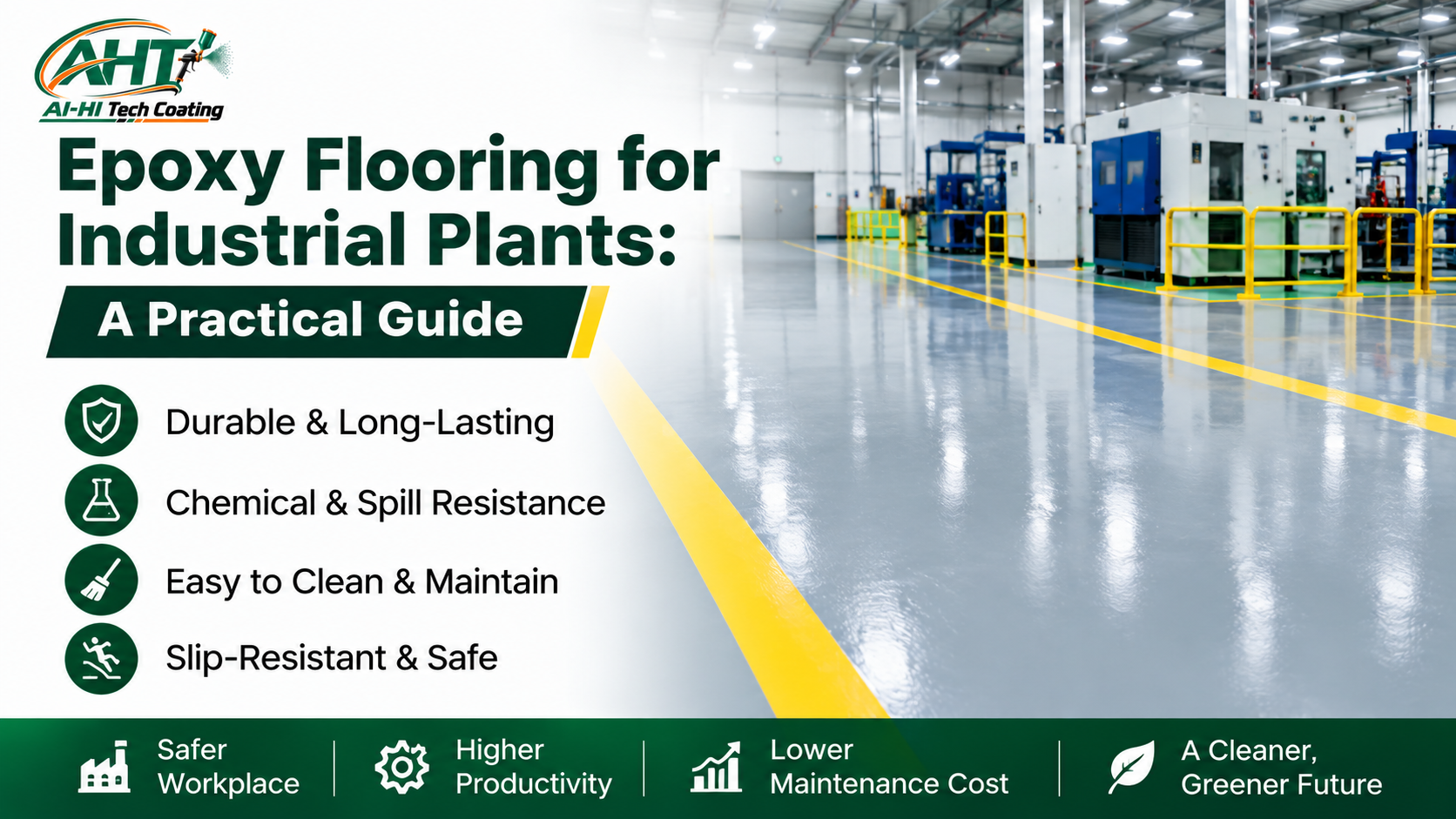
Industrial plants operate in demanding environments where floors are exposed to heavy traffic, machinery, chemicals, oil, impact, abrasion and frequent cleaning. A conventional concrete floor may not always provide the durability, cleanliness and performance required for these conditions.
Epoxy flooring is a popular industrial flooring solution that can create a seamless, durable and easy-to-maintain surface when the correct system is selected and professionally installed.
This guide explains the important factors to consider when choosing epoxy flooring for an industrial plant.
What is industrial epoxy flooring?
Industrial epoxy flooring is a resin-based flooring system applied over a properly prepared concrete substrate.
Epoxy resin is combined with a hardener and applied according to the requirements of the selected flooring system. After curing, it forms a hard and durable surface.
Depending on the application, industrial epoxy flooring can be designed to provide:
High abrasion resistance
Good chemical resistance
Impact resistance
Easy cleaning
Seamless finish
Improved dust control
Slip-resistant properties
Attractive and professional appearance
The flooring system should be selected according to the actual operating conditions of the plant.
Why do industrial plants need specialized flooring?
Industrial floors experience much more demanding conditions than normal residential or office floors.
A plant floor may be exposed to:
Forklifts
Heavy machinery
Pallet trucks
Vehicles
Oil and grease
Chemicals
Continuous pedestrian traffic
Heavy loads
Impact
Abrasion
Frequent washing
Temperature changes
If the floor is not designed for these conditions, it may develop cracks, surface wear, dusting, peeling or other forms of deterioration.
A properly specified epoxy flooring system can help improve the durability and maintainability of the floor.
Benefits of epoxy flooring in industrial plants
1. High durability
Epoxy flooring can provide a hard-wearing surface suitable for many industrial environments.
When correctly specified and installed, it can withstand regular pedestrian traffic, industrial equipment and other mechanical stresses.
2. Chemical resistance
Industrial plants may use or store:
Oils
Lubricants
Fuels
Cleaning chemicals
Acids
Alkalis
Solvents
Epoxy systems can provide resistance to many chemicals, but the exact chemical compatibility should always be checked for the specific product and exposure conditions.
3. Easy to clean
The seamless nature of many epoxy flooring systems makes them easier to clean compared with damaged or heavily porous concrete surfaces.
This can be particularly useful in industrial facilities where regular cleaning is required.
4. Reduced dusting
Concrete floors can produce dust through surface wear and deterioration.
A suitable epoxy coating can help seal the concrete surface and reduce dust generation.
This can contribute to a cleaner working environment and help protect equipment from excessive dust.
5. Improved appearance
Industrial flooring does not have to look purely functional.
Epoxy flooring is available in different colours, finishes and designs, allowing facilities to create a cleaner and more organized appearance.
Different colours can also be used to visually separate:
Walkways
Production areas
Storage zones
Equipment areas
Safety zones
Types of epoxy flooring for industrial plants
Different epoxy flooring systems are available depending on the requirements of the facility.
1. Epoxy coating
Epoxy coating systems are suitable for applications where a durable protective layer is required over prepared concrete.
They can be considered for areas with light to moderate industrial traffic, depending on the system specification.
2. High-build epoxy flooring
High-build systems provide greater film thickness than conventional thin coatings.
They can be considered for areas requiring increased durability and protection.
3. Self-leveling epoxy flooring
Self-leveling epoxy systems are designed to create a smooth and seamless surface.
They can be suitable for industrial and commercial areas where a smooth, easy-to-clean finish is required.
4. Anti-skid epoxy flooring
Anti-skid systems incorporate suitable aggregates or surface textures to improve slip resistance.
They can be useful in areas exposed to:
Water
Oil
Chemicals
Cleaning operations
Ramps
Industrial processes
The required slip resistance should be selected according to the operating environment.
5. Heavy-duty epoxy flooring
Heavy-duty systems are designed for demanding industrial applications where the floor is exposed to high traffic, heavy loads and significant mechanical wear.
The complete system, including substrate preparation, primer, flooring layers and finish, should be designed according to the project requirements.
Surface preparation: The most important step
One of the most important factors in industrial epoxy flooring is surface preparation.
The concrete substrate must be properly assessed and prepared before the epoxy system is installed.
Preparation may include:
Removing dust and contaminants
Removing oil and grease
Mechanical grinding
Shot blasting where appropriate
Repairing damaged concrete
Filling suitable cracks
Treating joints
Vacuum cleaning
Creating the required surface profile
Poor preparation can result in problems such as peeling, delamination, blistering and premature failure.
Even a high-quality epoxy product cannot compensate for an unsuitable or poorly prepared substrate.
Moisture and concrete condition
Before applying epoxy, the condition of the concrete should be assessed.
Moisture-related problems can affect coating adhesion and may contribute to blistering or delamination.
The substrate should therefore be evaluated for:
Moisture conditions
Surface strength
Cracks
Contamination
Existing coatings
Weak or damaged areas
Drainage conditions
The flooring system should then be selected and installed according to the site conditions and manufacturer's requirements.
Industrial epoxy flooring installation process
A typical industrial epoxy flooring project may follow these stages:
Site inspection → Concrete assessment → Surface preparation → Crack and joint treatment → Cleaning and vacuuming → Primer → Epoxy flooring application → Additional coats → Topcoat, where required → Inspection → Curing
The exact process varies according to the flooring system and project requirements.
During application, factors such as mixing ratio, pot life, coating thickness, temperature, humidity, recoat interval and curing time should be controlled according to the manufacturer's technical data.
Choosing the right epoxy flooring system
There is no single epoxy flooring system suitable for every industrial plant.
The correct system should be selected according to:
| Requirement | Consideration |
|---|---|
| Traffic | Pedestrian, forklift or vehicle traffic |
| Load | Weight of machinery and equipment |
| Chemical exposure | Type and concentration of chemicals |
| Abrasion | Level of mechanical wear |
| Impact | Risk of dropped tools or materials |
| Slip resistance | Wet, oily or high-risk areas |
| Cleaning | Frequency and cleaning chemicals |
| Temperature | Normal and extreme operating temperatures |
| Moisture | Condition of the concrete substrate |
| Required thickness | Depends on use and performance requirements |
A professional site assessment is recommended before selecting the final flooring system.
Industrial areas where epoxy flooring can be used
Epoxy flooring can be used in many industrial and commercial areas, including:
Manufacturing plants
Automobile workshops
Automobile component facilities
Warehouses
Engineering units
Production areas
Assembly areas
Machine rooms
Storage areas
Service centres
Showrooms
Utility areas
The system should always be selected based on the specific conditions of each area.
Common epoxy flooring problems
Improper specification or installation can lead to:
Peeling
Delamination
Blisters
Pinholes
Uneven finish
Colour variation
Cracking
Poor adhesion
Premature wear
Common causes include:
Poor surface preparation
Moisture problems
Incorrect mixing
Incorrect application thickness
Unsuitable environmental conditions
Incorrect product selection
Failure to follow curing and recoat requirements
Professional installation and proper quality control can help reduce these risks.
How to maintain industrial epoxy flooring
Proper maintenance can help preserve the performance and appearance of an epoxy floor.
Recommended practices
Sweep or vacuum regularly
Remove oil and chemical spills promptly
Use suitable cleaning products
Avoid dragging heavy metal objects across the floor
Inspect high-traffic areas regularly
Repair damaged areas at an early stage
Keep drainage areas clear
Follow the manufacturer's maintenance recommendations
Regular inspection is particularly important in forklift lanes, loading areas and other high-traffic zones.
How long can industrial epoxy flooring last?
The service life of epoxy flooring varies depending on the flooring system, thickness, surface preparation, traffic, chemical exposure, environmental conditions and maintenance.
A properly designed and professionally installed system can provide years of service in industrial environments.
However, the expected lifespan should always be assessed based on the specific project rather than applying one fixed number to every installation.
Epoxy flooring for industrial plants: Final considerations
Choosing industrial epoxy flooring is not simply about selecting a colour or coating material.
A successful flooring project requires:
Correct system selection + proper surface preparation + professional application + quality control + regular maintenance
When these factors are properly managed, epoxy flooring can provide a durable, seamless and easy-to-maintain surface for many industrial applications.
The AHT approach
At AHT – AI-HI Tech Coating, we focus on selecting industrial flooring systems according to the requirements of each project.
From site inspection and concrete preparation to primer application, epoxy installation and finishing, every stage plays an important role in achieving reliable flooring performance.
Whether you require flooring for a manufacturing plant, warehouse, automobile workshop, production area, engineering facility, service centre or commercial building, the appropriate epoxy flooring system can be selected according to the traffic, load, chemical exposure and operating conditions.
Need professional industrial epoxy flooring?
Contact AHT – AI-HI Tech Coating for professional epoxy flooring, industrial flooring, PU flooring, protective coatings and waterproofing solutions tailored to your project requirements.
Built for industry. Designed for performance. Applied professionally.