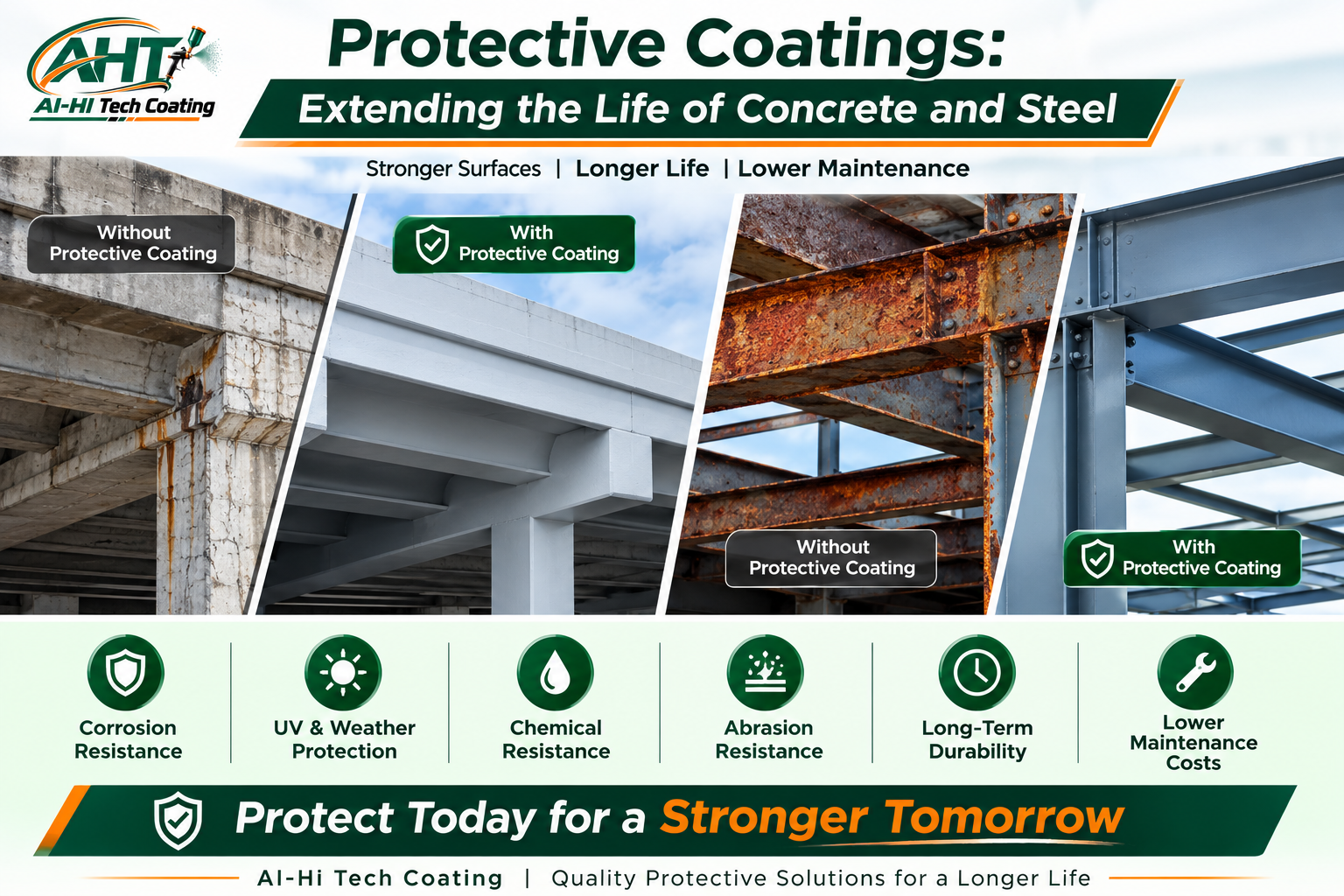
Concrete and steel are essential materials in industrial, commercial and infrastructure projects. However, both materials can deteriorate over time when exposed to moisture, chemicals, abrasion, weathering, corrosion and demanding operating conditions.
Protective coatings provide an effective way to protect concrete and steel surfaces from these damaging conditions.
When the correct coating system is selected and professionally applied, it can help improve durability, reduce maintenance requirements and extend the service life of the underlying structure.
What are protective coatings?
Protective coatings are specially formulated materials applied to concrete, steel and other substrates to create a protective barrier between the surface and the surrounding environment.
Depending on the application, protective coating systems can provide resistance against:
- Water and moisture
- Corrosion
- Chemicals
- Abrasion
- Industrial contaminants
- Weathering
- UV exposure
- Oils and fuels
- Mechanical wear
The coating system should always be selected according to the substrate, environmental conditions and expected exposure.
Why are protective coatings important?
Concrete and steel can deteriorate when they are continuously exposed to harsh conditions.
For example, moisture can penetrate concrete and contribute to deterioration, while steel can develop corrosion when exposed to moisture and aggressive environments.
Protective coatings help reduce direct exposure and create a barrier that can protect the substrate.
A suitable coating system can help:
- Extend the service life of structures
- Reduce maintenance requirements
- Protect against corrosion
- Improve resistance to chemicals
- Reduce water penetration
- Improve surface durability
- Maintain a cleaner and more attractive appearance
Protective coatings for concrete
Concrete is strong and durable, but it is not completely resistant to environmental damage.
Concrete surfaces can be affected by:
- Water penetration
- Chemical exposure
- Abrasion
- Carbonation
- Freeze-thaw conditions in suitable climates
- Industrial contamination
- Oil and fuel exposure
- Continuous moisture
Protective coatings can help create a barrier over the concrete surface and reduce exposure to damaging agents.
Common applications for concrete protective coatings
Protective coatings may be used on:
- Factory floors
- Industrial walls
- Parking areas
- Concrete structures
- Warehouses
- Manufacturing facilities
- Water-treatment areas
- Industrial plants
- Commercial buildings
The correct coating depends on whether the primary requirement is waterproofing, chemical resistance, abrasion resistance, aesthetics or a combination of these properties.
Protective coatings for steel
Steel structures are particularly vulnerable to corrosion when exposed to moisture, chemicals and aggressive environments.
Corrosion can reduce the service life of steel components and increase maintenance costs.
Protective coating systems can provide a barrier between the steel surface and the surrounding environment.
Depending on the project, a steel protection system may include:
Surface preparation → Primer → Intermediate coating → Protective topcoat
Each layer can have a specific function, such as improving adhesion, providing corrosion protection or delivering resistance to environmental exposure.
Common applications for steel protective coatings
Steel coatings can be used for:
- Structural steel
- Industrial machinery
- Steel tanks
- Pipelines
- Bridges
- Manufacturing equipment
- Industrial structures
- Steel supports
- Commercial and infrastructure components
Types of protective coatings
Different coating technologies are available for different requirements.
1. Epoxy coatings
Epoxy coatings are widely used for industrial and protective applications because they can provide good adhesion, hardness, abrasion resistance and resistance to many chemicals.
They are commonly used on concrete floors, industrial surfaces and prepared steel substrates.
2. Polyurethane coatings
Polyurethane coatings can provide good durability, abrasion resistance and weathering performance.
They may be used as protective topcoats where resistance to environmental exposure and appearance retention are important.
3. Anti-corrosion coatings
Anti-corrosion systems are designed specifically to protect steel and other metal substrates from corrosion.
The coating system may include a suitable primer and one or more protective layers depending on the exposure conditions.
4. Chemical-resistant coatings
Industrial environments may expose surfaces to acids, alkalis, solvents, oils and other chemicals.
Chemical-resistant coating systems can be selected according to the specific chemical exposure, concentration, temperature and duration.
5. Waterproof protective coatings
Waterproofing and protective coating systems can help reduce water penetration into suitable concrete and building surfaces.
These systems can be used in areas such as:
- Roofs
- Basements
- Concrete structures
- Wet areas
- Decks
- Industrial facilities
The system should be selected according to the substrate and the type of water exposure.
Surface preparation: The key to coating performance
One of the most important factors in protective coating performance is surface preparation.
Even a high-quality coating can fail prematurely if it is applied over a contaminated, weak or improperly prepared surface.
Depending on the substrate, preparation may include:
- Cleaning
- Degreasing
- Mechanical grinding
- Abrasive blasting
- Removal of loose material
- Removal of rust and corrosion
- Crack repair
- Surface profiling
- Dust removal
For steel, the required level of preparation should be determined according to the coating system and project specifications.
For concrete, the surface should be sound, clean and suitably prepared before coating application.
Choosing the right protective coating
There is no single protective coating suitable for every project.
The coating system should be selected based on:
Factor | Why it matters |
Substrate | Concrete and steel require different preparation and systems |
Chemical exposure | Determines required chemical resistance |
Moisture | Influences coating selection and application |
Traffic | Determines abrasion and mechanical resistance |
Temperature | Some coatings have specific temperature limitations |
UV exposure | Important for exterior applications |
Required thickness | Affects protection and service performance |
Surface condition | Determines preparation requirements |
Maintenance | Influences long-term performance |
A professional site assessment helps identify the correct coating system before application.
Professional application process
A typical protective coating project may follow these stages:
Site inspection → Surface preparation → Cleaning → Repairs → Primer → Intermediate coating → Topcoat → Inspection → Curing
The exact process can vary depending on the substrate and coating system.
During application, factors such as temperature, humidity, surface condition, mixing ratio, pot life, coating thickness and recoat interval should be controlled according to the manufacturer's technical requirements.
How protective coatings extend service life
Protective coatings work by reducing the exposure of the underlying material to damaging environmental conditions.
For concrete, a suitable coating can help reduce exposure to moisture, chemicals and abrasion.
For steel, a properly designed coating system can help reduce contact between the metal surface and corrosive elements.
This can help reduce deterioration and the frequency of major maintenance or repair work.
However, protective coatings are not a substitute for proper structural repair. Cracks, corrosion, damaged concrete and other substrate defects should be assessed and treated appropriately before coating application.
Common causes of protective coating failure
Coating failures can occur for several reasons, including:
- Poor surface preparation
- Moisture problems
- Contamination
- Incorrect coating selection
- Incorrect mixing
- Inadequate coating thickness
- Applying under unsuitable environmental conditions
- Poor application technique
- Failure to follow recoat intervals
- Inadequate curing
Professional preparation and application are therefore essential for achieving reliable long-term performance.
How to maintain protective coatings
Regular inspection and maintenance can help extend the service life of a protective coating system.
Recommended practices include:
- Inspect coated surfaces periodically
- Clean chemical and oil spills promptly
- Repair damaged coating areas early
- Monitor areas exposed to heavy abrasion
- Check steel structures for signs of corrosion
- Follow the recommended cleaning procedure
- Recoat when required based on the condition of the system
Early intervention can prevent localized coating damage from developing into more extensive deterioration.
Where are protective coatings commonly used?
Protective coating systems are widely used in:
- Factories
- Warehouses
- Automobile workshops
- Manufacturing plants
- Power and utility facilities
- Water-treatment facilities
- Commercial buildings
- Parking structures
- Infrastructure projects
- Industrial equipment and structures
The appropriate system depends on the specific operating environment and performance requirements.
The AHT approach
At AHT – AI-HI Tech Coating, we focus on selecting protective coating systems according to the requirements of each project.
From surface inspection and preparation to material selection, application and finishing, every stage plays an important role in achieving reliable and long-lasting protection.
Whether you require protection for concrete floors, industrial structures, steel surfaces, machinery, warehouses, factories or commercial facilities, the right coating system can help improve durability, reduce maintenance requirements and extend service life.
Need professional protective coating solutions?
Contact AHT – AI-HI Tech Coating for professional protective coatings, epoxy flooring, industrial flooring, waterproofing and corrosion protection solutions tailored to your project requirements.
Protect the surface. Extend service life. Reduce maintenance.