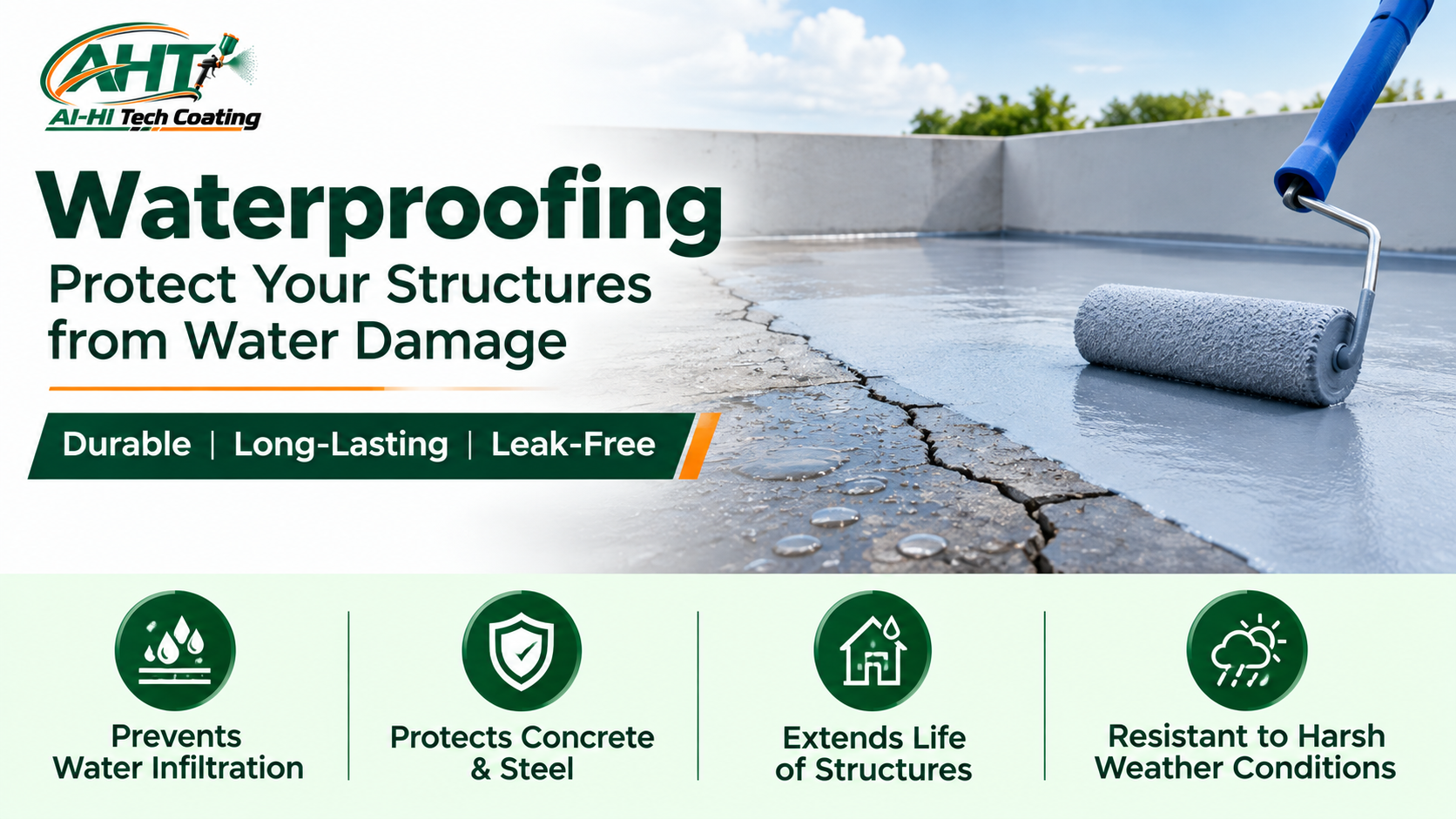
Water exposure is one of the most common causes of deterioration in buildings and concrete structures. Roofs, decks and facades are continuously exposed to rain, humidity, temperature changes and other environmental conditions that can lead to water seepage, dampness, cracking and surface deterioration.
A properly designed and professionally applied waterproofing system can help prevent water penetration, protect the underlying structure and reduce long-term maintenance requirements.
Understanding waterproofing
Waterproofing is the process of protecting a building surface or structure from water penetration.
A waterproofing system creates a protective barrier that helps prevent water from entering areas such as:
Roofs
Terraces
Decks
Facades
Balconies
Basements
Concrete structures
Wet areas
The right waterproofing system depends on the type of surface, water exposure, movement, weather conditions and the specific requirements of the project.
Why is waterproofing important?
Water that enters a building or concrete structure can cause problems over time.
Common issues include:
Water leakage
Damp patches
Staining
Paint and plaster damage
Concrete deterioration
Cracking
Corrosion of reinforcement
Mould and moisture-related problems
Damage to interior finishes
Waterproofing helps reduce the risk of these problems by limiting water penetration and protecting vulnerable surfaces.
Waterproofing solutions for roofs
Roofs and terraces are among the most exposed parts of a building.
They are directly exposed to:
Rainwater
Sunlight
Temperature fluctuations
Standing water
Wind
Seasonal weather conditions
A suitable roof waterproofing system can help protect the roof slab and reduce the risk of water entering the building.
Common roof waterproofing considerations
Before selecting a system, it is important to inspect:
Existing cracks
Drainage conditions
Surface slope
Existing waterproofing
Expansion and movement joints
Concrete condition
Areas of ponding water
Previous leakage points
Proper drainage is particularly important. Waterproofing should work together with an effective drainage system rather than being relied upon to compensate for persistent water accumulation.
Waterproofing for decks and terraces
Decks, terraces and exposed concrete surfaces can experience significant water exposure and thermal movement.
Water can enter through cracks, joints, porous concrete and poorly detailed areas.
A suitable waterproofing system can help protect these surfaces while allowing them to remain functional and durable.
Important areas to inspect
Special attention should be given to:
Construction joints
Expansion joints
Drainage outlets
Corners
Parapet junctions
Pipe penetrations
Cracks
Surface transitions
These areas are often more vulnerable to water penetration than large flat surface areas.
Waterproofing for facades
Building facades are exposed to rain, humidity, sunlight and changing weather conditions.
Water can penetrate through cracks, porous materials, damaged joints and poorly sealed openings.
Facade waterproofing and protective treatment can help reduce water penetration while maintaining the appearance and performance of the building envelope.
Common facade applications
Waterproofing or protective systems may be considered for:
Concrete facades
Masonry surfaces
External walls
Commercial buildings
Industrial buildings
Residential structures
Balconies
Exposed concrete surfaces
The coating or treatment should be selected according to the type and condition of the facade material.
Types of waterproofing systems
Different waterproofing technologies are available for different applications.
1. Cementitious waterproofing
Cement-based waterproofing systems are commonly used on suitable concrete and masonry surfaces.
They can be considered for applications where a mineral-based waterproofing layer is appropriate.
Typical applications include:
Concrete structures
Basements
Wet areas
Water-retaining structures
Internal and external concrete surfaces
2. Liquid-applied waterproofing
Liquid-applied systems are applied to the surface and form a continuous waterproofing membrane after curing.
One advantage of liquid systems is their ability to create a seamless layer around suitable details and complex surface areas.
They can be considered for:
Roofs
Terraces
Decks
Balconies
Facades
Complex areas with multiple penetrations
3. Protective waterproof coatings
Certain protective coating systems can provide resistance against water and environmental exposure while also protecting the underlying surface.
These systems may be used on concrete, walls and other suitable substrates depending on the product specification.
4. Waterproofing membranes
Membrane systems can provide a continuous barrier against water penetration.
The membrane type, thickness, installation method and detailing should be selected according to the project requirements.
Surface preparation: A critical step
Waterproofing performance depends heavily on proper surface preparation.
Before application, the surface should be inspected and prepared according to the requirements of the selected system.
Preparation may include:
Cleaning
Removal of loose material
Removal of dust and contaminants
Crack repair
Joint treatment
Surface profiling
Repair of damaged concrete
Treatment around pipe penetrations and drainage points
A waterproofing product cannot perform properly if the substrate is weak, contaminated or improperly prepared.
The importance of cracks and joints
Cracks and joints are common points where water can enter a structure.
Before waterproofing, cracks should be assessed to determine their cause and significance.
Depending on the situation, treatment may involve:
Crack repair
Joint sealants
Flexible detailing
Reinforcement at critical areas
Appropriate membrane or coating treatment
The correct treatment depends on whether the crack is static, moving or related to structural conditions.
Waterproofing application process
A typical waterproofing project may follow these stages:
Site inspection → Surface preparation → Crack and joint treatment → Primer, where required → Waterproofing application → Detailing → Additional coats, where specified → Inspection → Curing
The exact procedure varies depending on the waterproofing system and substrate.
Application conditions such as temperature, humidity, surface moisture, coating thickness and curing time should be controlled according to the manufacturer's technical requirements.
How to choose the right waterproofing system
There is no single waterproofing solution suitable for every project.
The system should be selected according to:
| Factor | Why it matters |
|---|---|
| Surface type | Concrete, masonry and other substrates have different requirements |
| Water exposure | Determines the required level of protection |
| Surface movement | Flexible systems may be required in moving areas |
| Weather exposure | Important for roofs, decks and facades |
| Drainage | Standing water can affect long-term performance |
| Cracks and joints | Require appropriate treatment |
| UV exposure | Important for exposed exterior surfaces |
| Traffic | Important for accessible decks and terraces |
| Maintenance | Affects long-term performance |
Common waterproofing problems
Waterproofing systems can fail when the underlying causes are not properly addressed.
Common problems include:
Poor surface preparation
Incorrect system selection
Application over damp or unsuitable substrates
Unrepaired cracks
Poor detailing around joints
Inadequate drainage
Insufficient coating thickness
Incorrect application conditions
Inadequate curing
Damage to the waterproofing layer after installation
Professional inspection and correct installation can significantly reduce these risks.
How to maintain waterproofed surfaces
Regular inspection can help identify problems before they become serious.
Recommended practices include:
Keep roof drains and outlets clear
Remove standing water where possible
Inspect cracks and joints periodically
Check areas around pipe penetrations
Repair damaged coating promptly
Avoid unnecessary damage to waterproofing layers
Inspect surfaces after heavy rainfall
Follow the recommended maintenance procedure
Early detection can help reduce the cost and extent of future repairs.
Signs that your building may need waterproofing
You may need professional waterproofing assessment if you notice:
Water leakage
Damp patches
Ceiling stains
Peeling paint
Cracks around roof areas
Water seepage through walls
Persistent moisture
Ponding water on terraces
Damaged facade surfaces
Recurring leakage after rainfall
A professional site inspection can help identify the source of water entry and determine the appropriate waterproofing solution.
The AHT approach
At AHT – AI-HI Tech Coating, we focus on selecting waterproofing systems according to the requirements and condition of each project.
From site inspection and surface preparation to crack treatment, waterproofing application and finishing, every stage plays an important role in achieving reliable protection.
Whether you require waterproofing for a roof, terrace, deck, facade, concrete structure, commercial building or industrial facility, the right system can help reduce water penetration and protect the underlying structure.
Need professional waterproofing solutions?
Contact AHT – AI-HI Tech Coating for professional waterproofing, protective coatings, epoxy flooring and industrial coating solutions tailored to your project requirements.
Protect against water. Protect the structure. Build for long-term performance.